
Montessori
z-z220649704631.jpg)
Dr. Maria Montessori
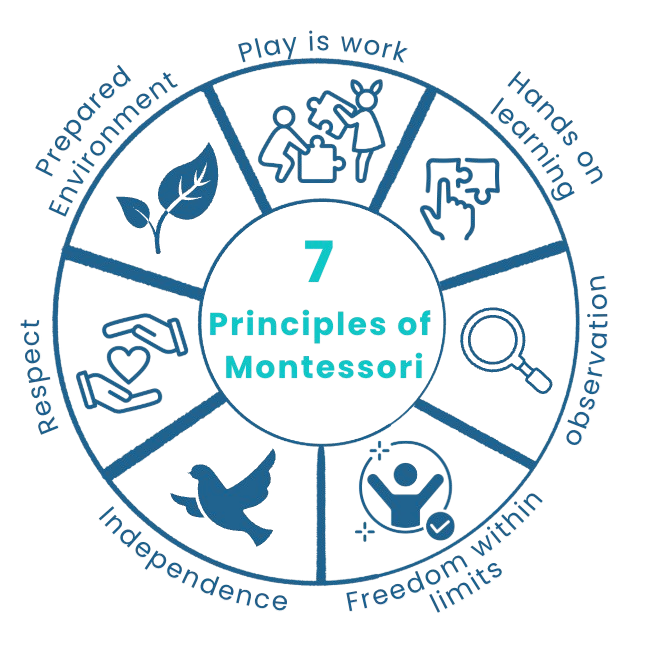
1. Prepared Environment
Everything in the classroom is child-sized, neatly organized, and accessible. Montessori materials are arranged on open shelves and grouped by subject: practical life, sensorial, math, language, science, culture, etc. Our learning environment promotes calm, order, and focus for children.
2. Mixed-Age Grouping
A Montessori classroom often includes children aged 3 to 6 in the same class in order to promote collaboration and social learning. As Dr. Maria Montessori said “Older children act as role models, while younger ones learn by observing and imitating.”.
3. Montessori Materials
We realized the importance of using Montessori materials. The reason why we need Montessori materials is that they are specialized, self-correcting learning tools made of natural materials like wood. For example, Pink Tower for size discrimination and motor skills. Moveable Alphabet for building words and early writing as well as Golden Beads for understanding place value and math operations. These materials isolate one concept at a time and allow children to learn through hands-on repetition.
4. Teacher as a Guide
At Casgala, Montessori teachers have been trained in the Montessori training program. They carefully observe and introduce lessons individually or in small groups. Children work at their own pace, choosing activities that match their interests and skill level. The teacher’s role is to connect the child with materials, not to direct every action.
5. Child-Centered Learning
Children choose their work, move freely, and manage their own time. They can develop independence, concentration, and self-discipline. All Montessori activities are purposefully work and often linked to real-life skill.
6. Integrated Curriculum
In Montessori class, subjects aren’t taught in isolation. A child might explore reading, science, and geography all in one activity. For instance, children read a book about animals in different continents, together with placing animal figures on a world map.